After months of planning and selections, homeowners often enter another waiting period before construction officially starts: the production queue.
This stage can feel frustrating. The design work is complete, excitement is high, and homeowners are ready to see visible progress. But this phase is critical for scheduling, permitting, coordination, and project preparation.
The good news is there’s plenty homeowners can do during this time to make construction smoother once work begins.
Packing always takes longer than expected.
Before construction starts:
This reduced stress significantly once demolition begins.
Construction disrupts routines quickly. It takes away frequently used spaces and can leave you feeling frustrated. To help avoid this stress, before crews arrive, plan for:
Even small preparations can make daily life much more manageable during construction.
The remodeling process can also take a toll emotionally.
There will likely be:
Homeowners who expect some level of inconvenience generally navigate the process with far less stress than those expecting perfection at every stage.
Organize Your Budget
Even well-planned remodels can uncover surprises once walls are opened.
Before construction starts:
Financial preparedness creates flexibility when unforeseen conditions arise.
Construction rarely stays perfectly contained.
Prepare your home by:
A little preparation helps minimize disruption throughout the home.
While it may feel like “waiting,” the production queue is actually where projects are being actively organized behind the scenes:
Using this time wisely allows construction to begin with fewer surprises and smoother execution.
A successful remodel doesn’t begin the day demolition starts — it begins with preparation long before the first wall comes down.
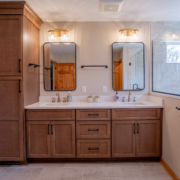
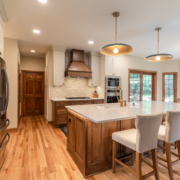
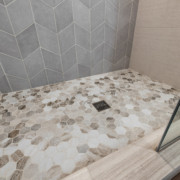
The design phase is where homeowners begin transitioning from broad ideas into detailed planning, selections, budgeting, and decision-making. It’s also where expectations are established for the rest of the project.
The Design Process Sets the Tone for Everything Else
While homeowners are often eager to see demolition begin, the design process is where the foundation for a successful remodel is truly built.
Thoughtful planning during this phase leads to:
Budget Expectations
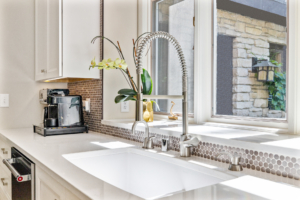
Throughout the design process, your designer will help you understand which ideas fit comfortably within your budget and which may require additional investment. If a particular feature becomes a must-have, you’ll have a choice; adjust the scope, explore alternative materials, or increase the investment to achieve your desired outcome.
The design phase is the ideal time to align expectations, priorities, and budget. Open communication early in the process allows your team to provide informed recommendations and helps ensure the finished project reflects both your vision and your investment goals.
Prepare for Decision Fatigue
Most homeowners underestimate how many decisions a remodel requires.
Cabinet styles, tile layouts, plumbing fixtures, hardware finishes, paint colors, lighting placement, countertop materials — the list grows quickly.
Instead of trying to perfect every choice:
The homeowners who experience the least stress are often the ones who commit confidently rather than endlessly second-guessing.
Stay Flexible
Remember to be adaptable, especially if your designer gives solid reasons something will not work. Sometimes the desired layout doesn’t work structurally. Materials may become unavailable. Budget realities may require reallocation.
The most successful remodeling experiences happen when homeowners stay collaborative and solution-oriented instead of becoming attached to one exact outcome.
Flexibility allows the project to evolve without turning every adjustment into a source of frustration.
Understand the Timeline
Many homeowners assume delays mean inactivity. In reality, substantial work is happening behind the scenes during the design phase:
Understanding this process helps reduce anxiety during quieter stretches of the project.
Build Trust With Your Team
The design phase is where communication habits are established.
Use this time to:
Strong communication early typically leads to smoother production later.
A well-managed design phase rarely feels flashy — but it is often what separates stressful remodels from successful ones.

Questions to Ask Before Building an Addition
When homeowners begin to outgrow their homes, the first solution that often comes to mind is an addition.
More square footage must mean more functionality, right?
Not always.
Many homes built between the 1940s and early 2000s were designed for lifestyles that look very different from today’s. Formal dining rooms sat empty except during holidays. Small, closed-off kitchens separated the cook from family and guests. Long hallways and oversized foyers consumed valuable square footage without adding much everyday function.
Before investing in an addition, it may be worth asking a different question:
Are you truly out of space—or are you simply not using it well?
Your Home May Already Have the Space You Need
One of the most rewarding parts of the design process is helping homeowners see possibilities they never considered.
What feels like a cramped kitchen may simply be surrounded by walls that no longer serve a purpose. A rarely used dining room could become the space needed for a larger kitchen, walk-in pantry, or mudroom. An oversized hallway might be transformed into additional storage, a laundry area, or a more functional layout.
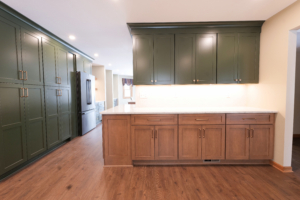
The square footage was always there. It simply wasn’t designed for the way your family lives today.
Why Older Floor Plans Often Feel Smaller
Homes built decades ago were designed around different priorities.
Separate rooms provided privacy and formality. Entertaining happened in dedicated spaces. Storage needs were different, and open-concept living wasn’t nearly as common as it is today.
As a result, many older homes contain areas that receive very little daily use, including:
While these spaces may have made sense when the home was built, they often create frustration for modern families who want better flow, visibility, and functionality.
Small Changes Can Have a Big Impact
Many homeowners are surprised by how dramatically a layout can change without adding square footage.
Removing a wall, relocating a doorway, reworking circulation paths, or combining underused rooms can completely transform the feel of a home.
Designers approach a floor plan differently than homeowners. Instead of seeing existing rooms, they look for opportunities:
Sometimes the solution isn’t adding more house—it’s making better use of the house you already have.
Often More Cost-Effective Than an Addition
There are certainly situations where an addition makes sense. However, additions typically involve new foundations, roofing, exterior finishes, structural work, and site modifications.
Reconfiguring existing space can often achieve similar lifestyle improvements while allowing more of the budget to be invested in finishes, functionality, and craftsmanship.
Rather than paying for more square footage, homeowners can focus on improving how their current space works every day.
The Power of Creative Design
The best remodeling projects begin with thoughtful problem-solving.
An experienced designer looks beyond walls and room labels to understand how your family actually lives. They identify inefficiencies, uncover hidden opportunities, and create solutions tailored to your goals.
Sometimes that solution is an addition.
But surprisingly often, the answer is already sitting within the existing footprint of the home.
A Home That Feels Brand New
One of the most common comments homeowners make after a successful remodel is:
“I can’t believe this is the same house.”
By rethinking layouts, reclaiming underutilized space, and designing around modern lifestyles, it’s possible to dramatically improve the way a home feels and functions—without adding a single square foot.
Before assuming you need a larger home, consider whether you simply need a better plan for the one you already have.
You may be surprised by how much potential is hiding in plain sight.
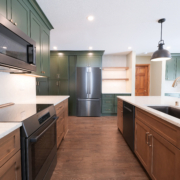
If you’re considering a renovation in preparation for selling your home, your return on investment (ROI) will be top of your mind. But even if ROI isn’t the primary reason you’re thinking about a remodel, it should be part of your planning. In fact, if you’ll be staying in your home for another 10 years or more, you’ll likely see a greater ROI through the natural appreciation of your home’s value.
Renovations with the highest ROI make the space more usable and more modern, sometimes extending the square footage of the home. They’re not changes based on current trends, but long-lasting improvements. Most of all, they’re renovations that are done well. Buyers can spot hasty, unprofessional work and cheap fittings — and you don’t want to live with them, either! DIY work done without permits can incur expenses when reselling, as you may have to retroactively acquire permits to ensure the work is up to code during the inspection stage.
So how much can you plan on recouping? The highest-value renovations are kitchens, bathrooms, and expansions. According to a recent report by the National Association of the Remodeling Industry, kitchen renovations can recoup around 80% of their cost, and can even have up to a 96% return, making it one of the top renovations in terms of value. A well-done bathroom can recoup 70-75% of its cost.
Increasing square footage of the house is another one of the best ways to increase its value, whether that’s finishing your basement, converting a deck to a sunroom, or making an addition. A finished basement instills an extra layer of confidence in buyers, as a basement renovation ensures the space was waterproofed, and would have uncovered and addressed any issues with the foundation. Homeowners can recoup between 60% and 80% of the cost of finishing their basement.

Those are attractive numbers, but how can you be sure your project qualifies? GMH will give you expert advice to give you the highest possible return on investment. Before our first visit to your home, we’ll thoroughly research your neighborhood and the sales data on comparable homes in order to help you set realistic goals. You want to avoid over-improving; the value of your renovated home should be close to that of your neighbors’, or it will be difficult to sell at the assessed price. For example, the best way to hit that 80% ROI on a basement remodel is if the project brings the usable square footage of your house into line with the average in the neighborhood, rather than blowing past it. If you’re financing your renovation, it may even be difficult to get funding, as financial institutions will consider sales comps when debating approval of a loan.
What can you do to maximize ROI? Higher sales price is just one side of the equation; the other is containing your costs. Beyond working with your contractor to choose your projects wisely, you’ll also want to look at your expenses. You may hit your target number for resale value, but ROI will depend on whether you hit your budget for the renovations. Be sure to create a realistic budget and stick to it.
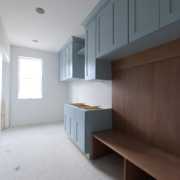
Active construction areas are full of potential safety hazards: loose wood, nails, exposed wiring, weak spots, ladders, open plumbing, and power tools, just to name a few. The obvious way to stay safe during a renovation is to note be there — if you have a vacation planned, or spend part of the year at a secondary residence, coordinate those dates as much as possible. But that’s not in the cards for everyone. Odds are, you’ll be living in your house while renovations are happening. If so, take precautions for the safety of your family and the crews who will be working in your home.
Before work begins, check for mold in the areas to be renovated. Mold or mildew can be hazardous even before it’s dispersed into the air, and most contractors require you to deal with it before they begin. Identify and mark the location of any utility lines. Check your contractor’s policy regarding handling hazardous materials like lead and asbestos. Test fire alarms and carbon monoxide detectors, and make sure you have fire extinguishers on hand.
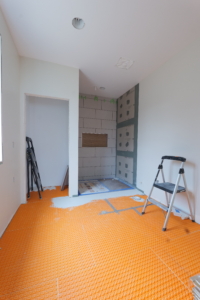 To prepare the space to be renovated, remove anything that can be removed. Move out furniture and appliances you’ll be keeping. Store as much as possible in your basement, garage, or offsite storage. Cover anything that needs to remain in place with dropcloths, tarps, or plastic sheeting. Pay attention to adjoining rooms as well. Clear all shared walls by moving furniture to the center of the room and taking down pictures; vibrations from power tools can cause them to fall and glass to shatter. Cover furniture, vents, and floors in adjacent areas to protect them from dust.
Make sure routes to and from the work space are easily navigated and that the floors are protected. Clear and free access is important to the safety of both the workers and your family. Think about where the workers will be walking — not just from the outdoors to the workspace, but from the workspace to the circuit breaker, or the water main, or the bathroom.
If you’re having more than one room remodeled, make a plan for when you’ll have access to which rooms, and when others will be off limits. The most planning comes with kitchen remodels: a full kitchen remodel can take anywhere from two weeks to a month, and you can’t spend all that time eating at restaurants! Plan a temporary place to cook that has suitable electricity for portable appliances like a hotplate, microwave, coffeemaker, mini fridge, or electric kettle. You’ll also need a place with running water for washing up — the laundry room or a spare bathroom. Your temporary kitchen should be away from the original kitchen so that your food is protected from dust and debris.
While workers are on site, keep the lines of communication open. Clear boundaries will help protect your privacy and the safety of their work area. Reputable contractors should have set work hours each day and stick to them (for example, GMH’s work hours are 7 am to 7 pm throughout the duration of the construction.) The driveway will need to be left clear for construction vehicles, so think about an alternative location to park your car during work hours.
It can be challenging to keep children and pets away from the work area, but it is vital you do so. Make sure your kids know where they can and can’t be while work is going on, and that they have something to keep them busy. If their natural curiosity will be too much for them, think about finding something fun for them to do outside of the house: day camps, weekends with grandparents, or trips with friends. For pets, set up boundaries they can’t get through. Close doors between rooms or use baby gates. For dogs, consider doggy day care; for cats, find a quiet room away from the noise that can be closed off.
The construction team will seal off the doorways to the construction area with plastic sheeting. Make sure those barriers remain intact; dust and fine debris travel far and fast
through any gaps. It’s most convenient for the contractors — and safest for you — for you not to enter the work space unless necessary. If you do need to step into the space to ask or answer questions, make sure you wear soled shoes and that you reseal the barriers after you leave. If you’re pregnant, stay away from the construction area.
While the construction team will tidy their work area each evening, keep an eye out for dust in the rest of your house, especially if you have family members who are sensitive to poor air quality. Light dusting each evening after work has finished will show you how much has escaped into the house; if you’re seeing dust on a regular basis, do a deep and thorough cleaning of the adjacent areas after construction is done.
Physical safety is one consideration, but security is another. Your home is more vulnerable to theft while renovation is ongoing. Make sure someone is there to receive the deliveries of tools and materials, and have them stored in a safe place until needed. The workers will be storing their tools, supplies, and materials on site, so think about the best and most secure area for storage.
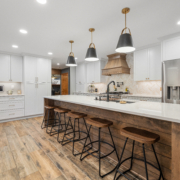
We’ve all seen home remodeling shows that promise budget-saving, do-it-yourself renovations — all accomplished in time-lapse filming. While such shows can be inspirational, they can also be a recipe for disappointment. DIY can be effective for basic cosmetic changes, but for anything involving electricity, plumbing, or structural changes, you need experts. Done well, remodeling will add value to your house. Done poorly, and you’re looking at needed repairs and a negative impact on your home’s value.
A common mistake when starting a remodeling project is not setting a realistic budget — or not setting a budget at all! According to a 2024 study by Houzz, at least a quarter of homeowners didn’t set a budget for their remodeling projects. Of the ones that did, nearly 40% spent more than they intended.
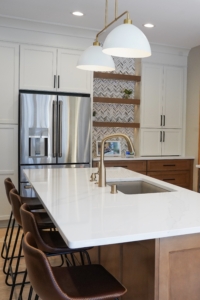 Some costs are obvious. For a kitchen, for example, there will be cabinetry, hardware, appliances, countertops, faucets, plumbing, and ventilation. But don’t overlook the smaller things. Have you accounted for the cost of gutting the workspace and debris removal? Asbestos or lead removal? Dumpster fees and cleanup? Often overlooked are the cost of permits. Permits are always needed when installing new plumbing or electrical wiring, changing a roofline, or building an addition or outbuilding.
Making a comprehensive list of expenses helps you navigate the proposals you get from contractors. The benefit of working with a contractor who offers an all-inclusive quote is that the price covers everything, including design, materials, labor, delivery fees, permits, and waste removal. Check your list of expected expenses against the proposals and see if there are any gaps. You’ll probably be surprised that there were some costs you may have overlooked!
Having a clear-eyed vision of how much things cost will help you make decisions. Comprehensive kitchen and bathroom remodels cost more due to plumbing, electrical work, and the price of custom cabinetry, countertops, and fixtures. A kitchen remodel costs anywhere from $32,000 to $90,000 and up in the Milwaukee metro area, depending on size and the quality of the finishes. Basement renovations cost from $40,000 to $60,000 and up; any additions, such as a bar or bathroom, will incur higher costs.
Have frank conversations with your contractor at the beginning of the process to avoid surprises. They can help you prioritize your projects, manage your expectations, and set firm outlines of the process. A professional designer can help you make decisions about where to splurge and where to be more budget-friendly. A clear, comprehensive design will also help you avoid the biggest threat to a homeowner’s budget: “scope creep.” Changing your mind mid-project adds costs due to new material purchases and change orders.
Some unexpected costs are inevitable, so add a contingency fund of 10-20% to your budget. For older houses, opt for the top of that range, as older homes have a greater potential to hide unpleasant surprises, such as mold, water damage, pests, or structural problems that will need to be dealt with. Your finished renovation will have to pass a code inspection; older homes are more likely that have had prior work that wasn’t done up to code or needs to be updated.
Also think about living expenses caused by the disruption in your life. You may need to rent a storage unit if you’re moving out furniture. Think about the higher costs of restaurants or ordering take out. You may need to board your pets. Ask your contractor if you’ll need to vacate the home at any point, and add a budget line item for a hotel stay or a temporary rental. In the end, clear communication with your contractor and realistic expectations will help your renovation go smoothly. If you talk about money honestly at the beginning of the process, you won’t be distressed about money at the end!
As you go through the process of choosing a contractor for your remodeling project, you’ll be doing lots of research on different companies, trying to find the one that fits your needs. Here’s just a few of the reasons that GMH stands out from the crowd:
We are highly qualified
GMH’s wide range of certifications include:
You can rest assured that GMH Construction is a reputable company that will stand by its work and abide by all government regulations and industry best practices.
We have an excellent reputation
Much of our business comes from personal referrals and repeat business, so we go to great lengths to maintain our sterling reputation. We aren’t satisfied with a project until you are! We can provide you with references after our initial proposal; you can also read feedback we’ve received from satisfied customers on our testimonials page.
We have over a half-century of experience
If you want your project to be on time, on budget, and completed to a high standard of quality, you need a contractor who knows what they are doing. Many of the stereotypes of contractors being late and over budget are the result of poor planning by inexperienced contractors. Remodeling is a very complex process that takes many years to fully master.
Greg and Dane have a combined experience of over 55 years in the residential construction industry working on a wide variety of projects. Because of their years of experience, GMH can prepare accurate bids and plans for both time and cost. Over the years, we’ve developed robust, step-by-step processes for the entire remodeling process from concept through full completion.
We are locally owned and operated
GMH is proud to have deep ties to the Pewaukee and SE Wisconsin area. We use local building material suppliers and local subcontractors with whom we’ve had relationships for many years. Local sourcing results in better quality for you, with minimal hassle and fewer delays.
We give excellent value for your investment
When you get multiple estimates from contractors, the low bids may be tempting, but ask yourself: Why? What are you not getting from that contractor relative to higher-priced alternatives? Low bids often end up costing more over the long term due to a laundry list of headache-inducing scenarios. Expensive change orders once the project starts. Poor workmanship or materials resulting in early life failure. Inexperienced contractors abandoning a project midstream. Finding out the contractor was unlicensed or uninsured after the fact. When considering a major investment in your home, cheaper isn’t always better.
We make the most of your hard-earned dollars. First by doing quality work that lasts. Second, because we are a one-stop shop for most of your needs, we realize significant savings for you verses having to hire multiple specialist contractors. Third, our one-year warranty means we’ll fix any workmanship issues for you, free of charge (even the best technicians make occasional mistakes). And finally, because we are licensed and maintain full insurance coverage, you are protected in case something catastrophic goes wrong.
We value communication and transparency
We know how important it is to be easy to reach. Poor communication is a common homeowner complaint about contractors. That is why we have implemented a secure online tool to help facilitate communications. Whenever you need to reach us, you can send an email, use the online tool, or call Dane or Greg directly.
Our employees are respectful and trustworthy
We know that a remodeling project can be a significant intrusion to your home and lifestyle, so we’ve trained our employees and subcontractors to clean up daily, show up on time, to be appropriate around children/ your family, and to be willing to answer any question that arises. We only send workers to your home who are either GMH employees, or from trusted subcontractors with whom we have established relationships.
We’re with you every step of the way
When the job transitions from Greg to Dane for onsite project management, they complete a thorough walk-through of the project and cover the requirements on the specifications sheets. Both Dane and Greg are available to discuss questions and concerns at every step of the project. GMH coordinates all materials and subcontractors so you don’t have to.
We’re efficient but flexible
We’ve developed basic standardized processes over the years so that every project goes smoothly and efficiently. However, we also understand that each project and client has its unique needs, so we are very flexible.
We value quality workmanship and materials
We will always complete your project to code and to the highest industry practices, using high-quality materials. We will also always give our very best to meet each client’s standards. Again, we value your referrals and can only get them by ensuring you are completely satisfied with all aspects of your project: Cost, schedule, and quality.